

Fever is one of the most common reasons parents visit the doctor. In reality, it is a symptom, not a disease in itself.
An elevated temperature is often a sign that the immune system is working to fight an infection.
However, concern arises when parents do not know:
When is a fever normal? And when does it become dangerous?
This guide explains the scientific principles for safely and effectively managing fever.
What is Fever?
Fever is defined as an increase in body temperature to:
– 38°C or higher when measured rectally
– 37.5 – 38°C when measured orally or under the arm
An elevated temperature is a natural immune response against viruses or bacteria.
Common Causes of Fever in Children:
– Common cold and influenza
– Sore throat infections
– Middle ear infections
– Gastrointestinal infections
– Urinary tract infections
– After certain vaccinations
When is Fever Not Dangerous?
In most cases, fever:
– Lasts from 2 to 3 days
– Responds to antipyretic medications
– Is accompanied by the child’s relative activity
If the child drinks fluids and reacts normally, there is often no immediate danger.
When Should You See a Doctor Immediately?
Seek medical attention in cases such as:
– If the child is under 3 months old and has a temperature of 38°C or higher
– If the fever persists for more than 3 days
– If seizures occur
– Difficulty breathing
– Unusual rash
– Severe lethargy or unresponsiveness
– Repeated vomiting or dehydration
The Correct Way to Measure Fever
The most accurate method for young children is rectal measurement.
For older children, you can use:
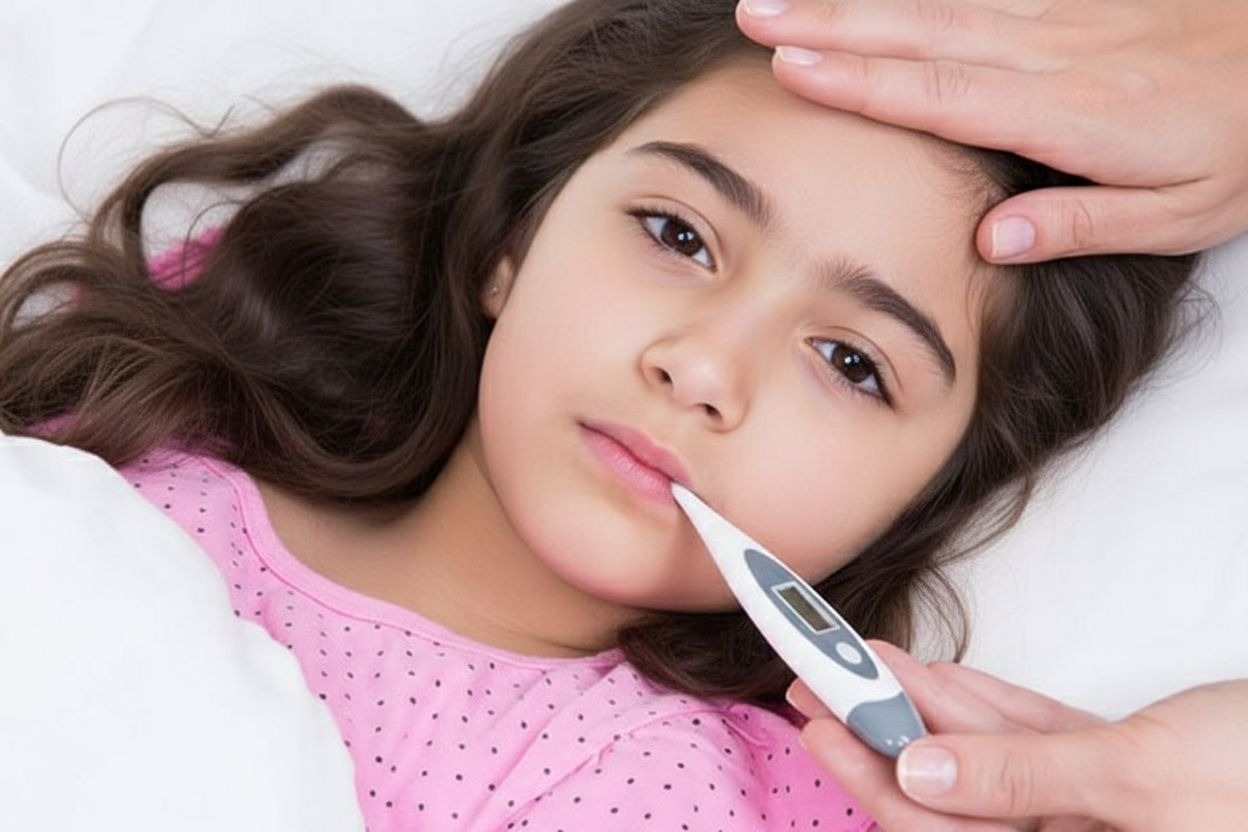
– Digital oral thermometer
– Ear thermometer
– Underarm (less accurate)
Avoid relying solely on touch.
How to Safely Reduce Fever?
1. Antipyretics
– Paracetamol at an appropriate dose based on weight
– Ibuprofen for children over 6 months
⚠️ Do not give aspirin to children.
2. Increase Fluid Intake
To prevent dehydration.
3. Light Clothing
Avoid excessive covering.
4. Rest
But staying in bed is not necessary if the child is active.
Common Mistakes to Avoid:
– Giving excessive doses
– Using very cold compresses or alcohol
– Giving antibiotics without a prescription
– Focusing only on the number without considering the child’s overall condition
Are Febrile Seizures Dangerous?
They sometimes occur between 6 months and 5 years due to a rapid spike in temperature.
They are usually short and not dangerous but require medical evaluation.
Summary
Fever in children is often a normal and temporary response.
The key is to monitor the child’s overall condition, not just the number.
Awareness of proper measurement techniques, appropriate doses, and warning signs ensures safe handling of this common condition.
Scientific References
Kliegman, R.M., St. Geme, J.W., Blum, N.J., Shah, S.S. & Tasker, R.C. (2020). Nelson Textbook of Pediatrics. 21st edn. Philadelphia: Elsevier.
American Academy of Pediatrics (2011). Febrile Seizures: Clinical Practice Guideline. Pediatrics, 127(2), pp.389–394.
American Academy of Pediatrics (2021). Fever and Temperature Taking in Children. Itasca, IL: American Academy of Pediatrics.
Centers for Disease Control and Prevention (2022). Fever and Vaccination: What Parents Should Know. Atlanta, GA: CDC.
National Institute for Health and Care Excellence (2021). Fever in Under 5s: Assessment and Initial Management (NG143). London: NICE.
منظمة الصحة العالمية (2019). Pocket Book of Hospital Care for Children: Guidelines for the Management of Common Childhood Illnesses. 2nd edn. Geneva: WHO.