


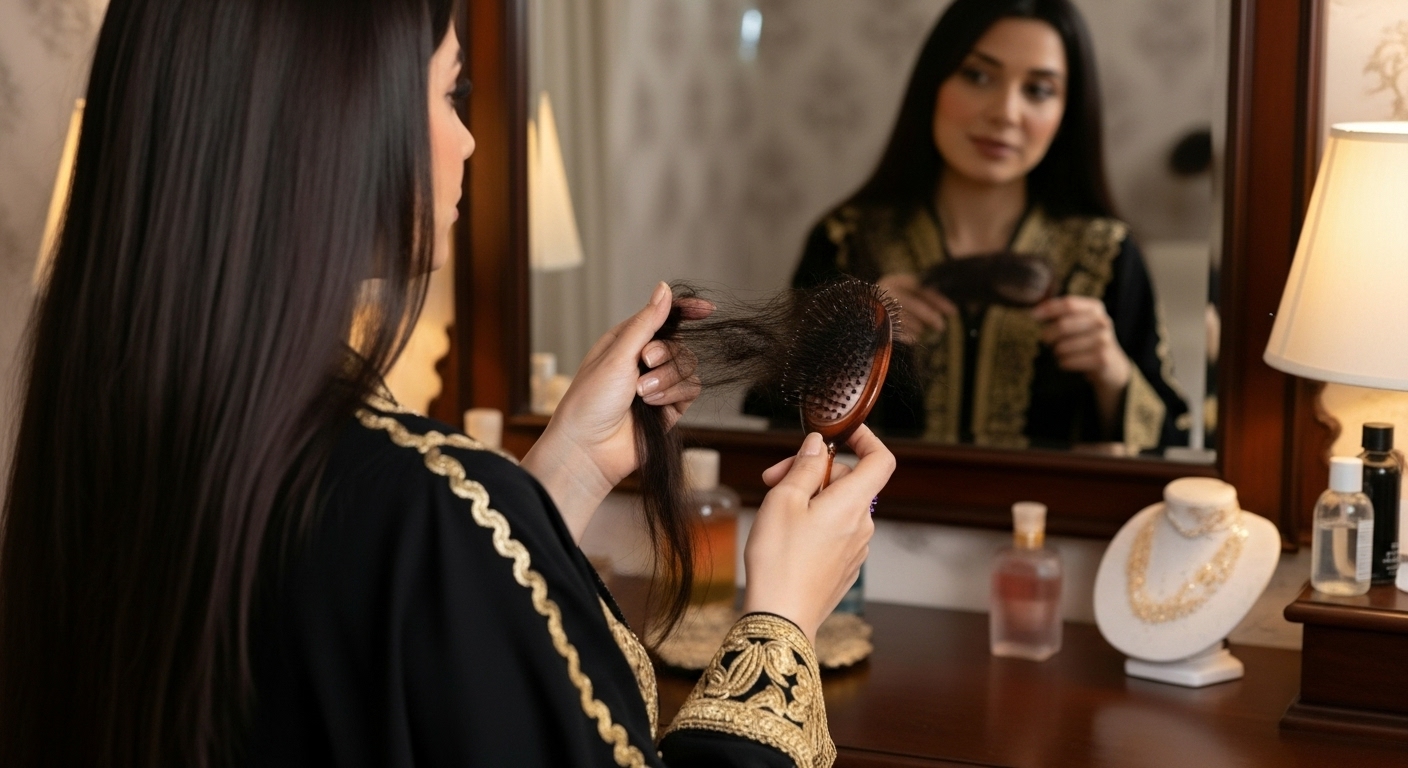
Many women experience hair loss at different stages of their lives. While it can be normal in some cases, it may sometimes indicate a health problem that needs medical intervention. Since hair is an important element of appearance and self-confidence, understanding the causes of hair loss and distinguishing between normal and pathological shedding helps in choosing the appropriate treatment at the right time.
What Is Normal Hair Loss?
It is normal for women to lose between 50 to 100 hairs daily as part of the natural hair growth cycle, which passes through three stages:
– Growth phase
– Regression phase
– Shedding phase
Hair loss becomes concerning when it exceeds the normal rate, persists for long periods, or is accompanied by a noticeable decrease in hair density.
Causes of Hair Loss in Women
Hormonal Changes
Hormones play a key role in hair health, with effects seen in cases such as:
– Pregnancy and postpartum
– Thyroid disorders
– Polycystic ovary syndrome (PCOS)
– Menopause
Vitamin and Mineral Deficiencies
Deficiencies in certain nutrients can weaken hair, with the most important being:
– Iron
– Vitamin D
– Vitamin B12
– Zinc
Stress and Psychological Tension
Severe stress can lead to a type of hair loss known as telogen effluvium, where a large number of hairs enter the shedding phase simultaneously.
علم الوراثة
This type is known as female hereditary baldness, typically presenting as thinning hair at the front or middle of the scalp without complete hair loss.
Incorrect Hair Care Practices
Such as:
– Excessive use of heat tools
– Tight hairstyles pulling on the hair
– Harsh dyes and chemicals
– Improper hair washing techniques
When Is Hair Loss a Sign of Disease?
It is necessary to consult a dermatologist in cases of:
– Sudden or heavy hair loss
– Noticeable bald patches
– Hair loss accompanied by itching or pain
– Hair loss with general symptoms like fatigue or weight loss
Methods of Diagnosing Hair Loss
Diagnosis depends on:
– Medical history and clinical examination
– Blood tests (iron, vitamin D, thyroid function)
– Scalp and hair examination
– In some cases, taking a small scalp biopsy
Methods of Treating Hair Loss in Women
Medical Treatment
The doctor determines the treatment based on the cause, which may include:
– Topical agents to stimulate hair growth
– Treatment of deficiencies in vitamins
– Hormonal regulation if needed
Cosmetic and Medical Procedures
– Mesotherapy sessions
– Platelet-rich plasma (PRP) therapy
– Low-level laser therapy
Lifestyle Improvements
– Reducing stress
– Balanced nutrition
– Adequate sleep
– Proper hair and scalp care
Can Hair Loss Be Prevented?
Not all types of hair loss can be prevented, but their severity can be reduced through:
– Early detection of causes
– Treating nutritional deficiencies
– Avoiding harmful hair practices
– Regular follow-up with a dermatologist
Summary
Hair loss in women is a common problem with various causes, ranging from normal and temporary to pathological and chronic. Early diagnosis and identifying the true cause are essential for choosing effective treatment. Daily care and a healthy lifestyle also play a vital role in maintaining healthy, strong hair.
Scientific References
1. American Academy of Dermatology (AAD). Hair loss in women: Causes and treatment. Updated 2024.
2. National Institutes of Health (NIH). Female pattern hair loss. Updated 2023.
3. Mayo Clinic. Hair loss in women. Reviewed 2024.
4. World Health Organization (WHO). Micronutrient deficiencies and hair health. Report 2023.
5. British Association of Dermatologists. Guidelines for the management of hair loss. Updated 2022.